![Scope Scoop [Enerlytics AI]](/_next/image?url=https%3A%2F%2Fcsuxjmfbwmkxiegfpljm.supabase.co%2Fstorage%2Fv1%2Fobject%2Fpublic%2Fuser-uploads%2Forg-website-56858%2Flogo-1789419472761.jpg&w=384&q=75)
Automated compliance reporting is AI-enabled carbon and energy reporting that delivers audit-ready Scope 1–3 disclosures and a documented evidence trail. It replaces manual spreadsheet consolidation with scheduled data flows, version-controlled emission factors, and reproducible calculations. The outcome is faster reporting cycles, defensible numbers under third-party assurance, and lower internal resourcing costs. The sections below cover the components, implementation stages, and procurement checklist behind it.
TL;DR:
- Automating Scope 1 and 2 emissions is quick once utility and meter data are integrated, but Scope 3 data collection often requires multiple reporting cycles.
- Maintaining version-controlled emission factors, detailed source logs, and formal exception handling is essential for audit-ready disclosures.
- Fully assurance-ready systems must record raw data sources, calculation provenance, and substitution logs, and assign clear roles for accountability.
- Vendor evaluation should prioritize evidence lineage, source integration capability, and export artifacts over just feature lists to ensure audit readiness.
- Simple fixes like pinning emission factor versions and logging data substitutions can significantly improve audit success within three months.
Table of Contents
- What Does Automated Compliance Reporting Actually Cover?
- What System Components Make Reporting Audit-Ready?
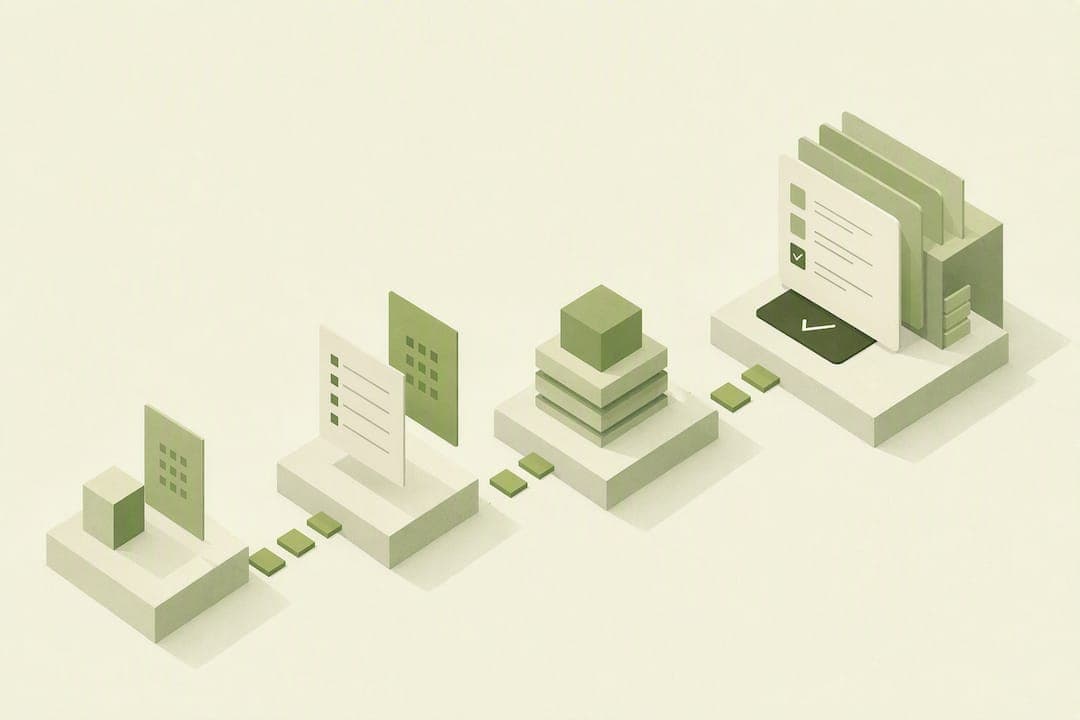
- How Do You Roll Out Automated Compliance Reporting In Stages?
- How Do You Choose Between Building, Buying, Or Commissioning A Solution?
- Why Do Most Compliance Reporting Projects Stall Before They Reach Assurance?
- How Enerlyticsai Fits The Audit-First Checklist
- Sources
- FAQ
What Does Automated Compliance Reporting Actually Cover?
Compliance reporting automation starts with three data categories, and they are not equally difficult. Scope 1 covers direct emissions from owned or controlled sources, such as fuel burnt in company vehicles or boilers. Scope 2 covers purchased electricity, heat, and steam. Both draw on metered data and utility bills, which makes them relatively straightforward to automate.

Scope 3 is different. It covers everything in the value chain, from purchased goods to employee commuting to end-of-life disposal, and it typically represents the largest share of a company's footprint. It is also the hardest to measure, because the data sits with suppliers, not the reporting company. Corporate carbon accounting confronts a genuine data problem here: supplier data gaps across multiple tiers force many companies to substitute industry-average emission factors, which flattens precision and makes disclosures harder to defend under audit.
Regulatory pressure has made this unavoidable. Reporting teams now build toward:
- The EU's Corporate Sustainability Reporting Directive and its European Sustainability Reporting Standards (CSRD/ESRS)
- The ISSB's IFRS S2 climate disclosure standard
- The UK's TCFD-aligned reporting requirements
Assurance adoption is rising, but many disclosures still lack a named assurance provider or a clearly specified scope, according to Anderson School of Management research. A large share of firms are still consolidating this in spreadsheets, which is exactly where audit trails break down and reporting cycles stretch into weeks.
What System Components Make Reporting Audit-Ready?
Audit readiness is not a feature you bolt on at the end. It is an architecture decision made at the start. Autonomous carbon workflows need to be built audit-first, not reporting-first, so every transformation from raw data to final figure stays reproducible and every input stays retrievable months later when an assurance provider comes to check it.
Five components separate a system that survives assurance from one that does not:
- A raw data landing zone that timestamps every input and records its source, whether that is a utility API, a bill aggregator, or an OCR-scanned invoice.
- An emission factor library with pinned versions, referencing authoritative sources (such as DEFRA or the GHG Protocol) rather than a factor that silently updates mid-year.
- A reproducible calculation layer that logs the exact inputs, the logic version applied, and the resulting output, so any figure can be traced back to its origin.
- Exception handling and substitution logs, recording every time an estimate replaces missing supplier data, with a formal escalation pathway when gaps exceed materiality thresholds.
- Defined roles: a data owner, a methodology owner, a system administrator, and a disclosure owner, each accountable for a distinct part of the chain.
Pro Tip: Pin your emission factor versions per reporting period and log both the source and version number. This one habit is what lets you reproduce last year's figures exactly, even after the factor library itself has moved on, which is precisely what an assurance engagement will ask you to prove.
Without this scaffolding, automation just moves the spreadsheet problem faster. With it, every number in the final report has a documented lineage back to a raw source.
How Do You Roll Out Automated Compliance Reporting In Stages?
Jumping straight to full automation without groundwork is the most common mistake reporting teams make. Practitioner guidance is consistent on this: map materiality and framework requirements before you touch a technology platform, not after. A staged rollout looks like this.
- Materiality assessment and gap analysis. Identify which emission sources and disclosure requirements actually apply to your organisation, then map what data you already hold against what you are missing. This stage is analytical, not technical, and skipping it means automating the wrong things first.
- Automate Scope 1 and Scope 2. Connect meter data and utility feeds through APIs or bill ingestion, and configure your emission factor management so figures update on a controlled schedule rather than manually.
- Automate Scope 3 where the data exists. Pull spend-based data from accounts payable and procurement systems, and begin structured supplier engagement to shift from industry averages toward primary supplier data over time.
- Reach full audit-readiness. Pin your factor versions for the reporting period, run a dry-run assurance test to surface evidence gaps before the real engagement, and finalise governance and sign-off procedures.
Pro Tip: Run the dry-run assurance test at least six weeks before your real engagement date. It surfaces missing evidence and broken exception logs while there is still time to fix them, rather than during the actual audit conversation.
Timelines vary by organisation size and data maturity, but most teams see Scope 1 and 2 automation deliver quick wins within a single reporting cycle, while Scope 3 supplier engagement often takes several cycles to mature. The most common pitfall is treating Stage 3 as optional. Given that Scope 3 is usually the largest and most material share of total emissions, skipping supplier engagement leaves the biggest number in the report resting on the weakest evidence.
How Do You Choose Between Building, Buying, Or Commissioning A Solution?
Procurement decisions in this space go wrong when teams evaluate features before they evaluate evidence. An assurance-ready platform needs to prove its lineage, not just its dashboard. Before shortlisting anything, work through this checklist.
- Evidence lineage: can every reported figure be traced back to a raw, timestamped source?
- Factor versioning: are emission factors pinned per reporting period, with source and version logged?
- Source integrations: does it connect directly to utility APIs, bill aggregators, and OCR for paper invoices?
- Supplier portal capability: can suppliers submit primary data directly, rather than everything defaulting to spend-based estimates?
- Assurance exports: can it generate the specific artefacts an auditor asks for, on demand, without a manual rebuild?
- API access and scalability: will it integrate with your existing ERP and CRM systems as data volumes grow?
When you request a demo, ask for three specific artefacts rather than a features walkthrough: a raw ingestion log, a calculation provenance export showing inputs and logic version, and an exception log showing how a data gap was flagged and resolved. If a vendor cannot produce these on request, that is a strong signal the underlying architecture was not built audit-first.
On cost, weigh the fully internal build (engineering time, ongoing factor-library maintenance, and the audit risk of a homegrown system) against subscription platforms and specialist consultants. Organisations with mature automation and data management generally report better audit outcomes and shorter reporting cycles than those still reconciling by hand, which is the return most procurement cases should be built around.
Why Do Most Compliance Reporting Projects Stall Before They Reach Assurance?
Three patterns explain most delays. Teams automate Scope 1 and 2 because the data is easy, then leave Scope 3 as a spreadsheet afterthought, even though it usually carries the most material risk. Emission factors get updated informally, mid-cycle, with no version log, so last year's figures cannot be reproduced when an auditor asks. And exception handling gets treated as a footnote instead of a governed process, so nobody can explain, six months later, why a specific number was estimated rather than measured.
The fix in the next 30 to 90 days is not a full platform overhaul. It is pinning your current factor versions today, logging every substitution you are already making, and running one dry-run assurance check against last quarter's numbers to see what breaks. Fix what surfaces before it becomes a live finding.
— Chris
How Enerlyticsai Fits The Audit-First Checklist
Enerlyticsai is built around the same audit-first criteria this article has walked through, not bolted onto a reporting dashboard as an afterthought. The platform combines predictive environmental modelling with real-time Scope emissions tracking, automated carbon and energy reporting, bill validation, and usage benchmarking, so the evidence trail behind every figure stays intact from raw data to final disclosure.
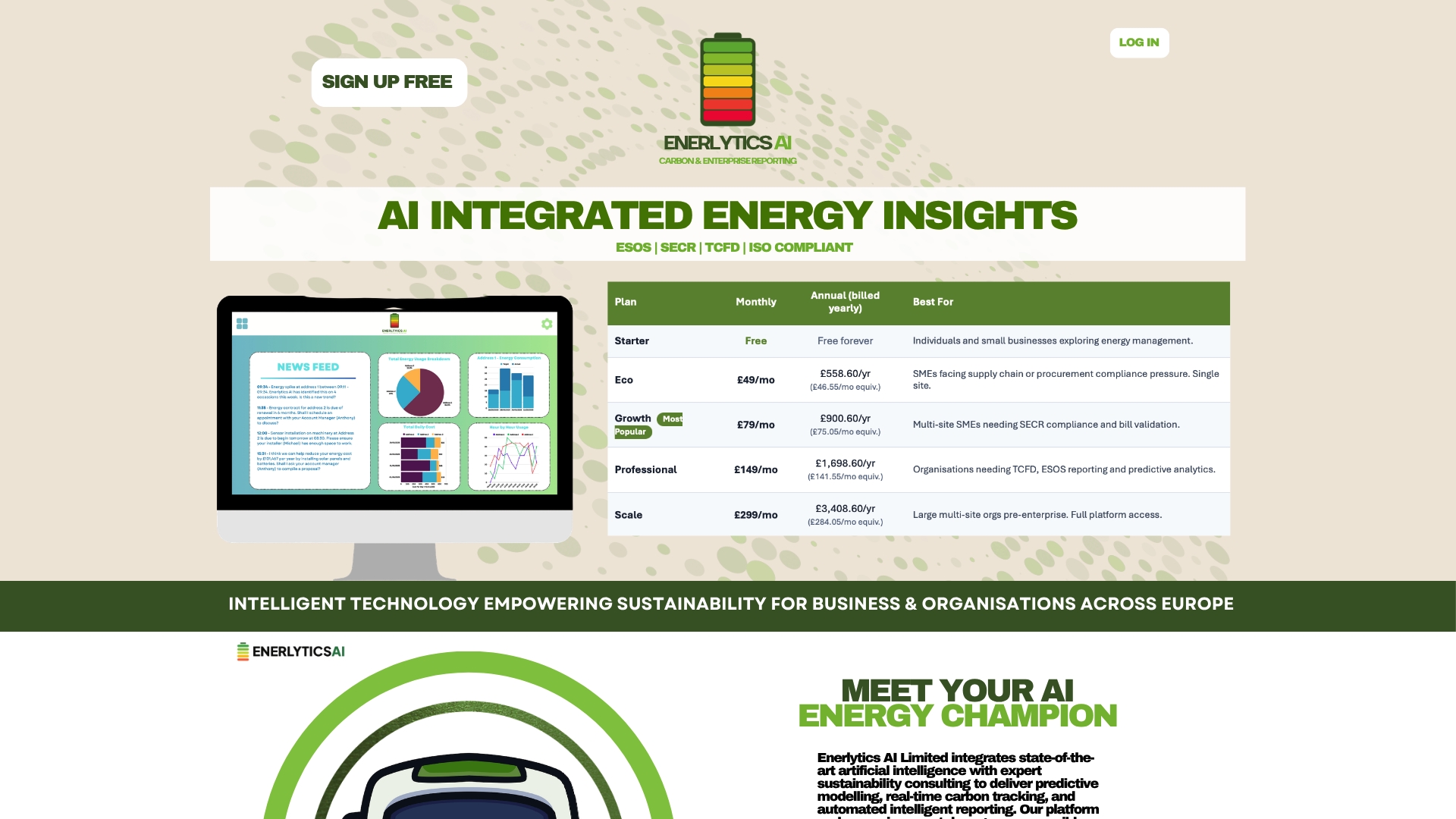
That matters most at the point where manual processes break down: reconciling utility bills against usage, catching anomalies before they distort a Scope 2 figure, and keeping factor versions consistent across a reporting period. Enerlyticsai's carbon and enterprise reporting platform is built to handle that consolidation automatically, which is precisely the work that eats weeks out of a reporting cycle when it is done by hand.
You can test this against your own data before committing to anything. Some platforms offer a 15-day free trial, giving sustainability teams, utilities, and consultants a direct way to see how automated reporting performs on real emissions and energy data. Start the trial or request a demo to see how it maps to your current reporting gaps.
Sources
- Corporate carbon accounting confronts a data problem | Meta Currents
- Carbon accounting workflows that survive assurance | Labarna
- ESG reporting automation: the complete guide (2026) | 100x Engineering
FAQ
How Long Does Automated Compliance Reporting Take To Implement?
Scope 1 and 2 automation typically delivers results within a single reporting cycle once meter and utility data are connected. Scope 3 supplier engagement usually takes several cycles to mature toward primary data.
Why Is Scope 3 Data So Hard To Automate?
Scope 3 emissions depend on supplier data across multiple tiers, and many suppliers cannot yet provide it, forcing companies to rely on industry-average emission factors instead of measured figures.
What Should I Ask A Vendor Before Committing To A Platform?
Ask for a raw data ingestion log, a calculation provenance export, and an exception log on demand. If a vendor cannot produce these artefacts, the underlying system likely was not built for assurance.
Does Automated Reporting Replace The Need For Third-Party Assurance?
No. Automation builds the evidence trail and reproducibility an assurance provider needs, but a qualified third party still verifies the disclosure.
What Does Enerlyticsai Cost To Try?
Enerlyticsai offers a 15-day free trial, with current pricing available directly on the Enerlyticsai website.